
Pogovorite se z Avo - vašo UI poslovno svetovalko

Pozdravljeni, sem Ava, vaša UI vodička k nadgradnji vašega poslovanja!
Ne glede na to, ali že poslujete ali o tem sanjate, sem vam na voljo za pomoč pri uresničevanju vaše vizije z uporabo freelancerjev s tehnologijo UI. Delite svoje poslovne cilje in skupaj bomo ustvarili projekt, v zvezi s katerim lahko naši talentirani freelancerji oddajo ponudbe. Skupaj uresničimo vašo vizijo!
Že poslujem
S poslovanjem šele začenjam
Pri pošiljanju pogovora na vaš e-naslov je šlo nekaj narobe. Poskusite znova pozneje.
Svoj pogovor lahko shranite samo enkrat na uro. Poskusite znova pozneje.
Vaš pogovor je prekratek. Če želite omogočiti shranjevanje, nadaljujte pogovor z Avo.
How to start a business in Pennsylvania
Dreaming of starting a business but not sure how to do it? In our step-by-step 2020 guide we teach you how to launch your business in Pennsylvania.
9. sep. 2019 • 9 minut branja
Posodobljeno dne 7. feb. 2020 s strani Adam S.

Content Manager at Freelancer.com
Kopiranje v odložišče ni uspelo, poskusite znova po spremembi vaših dovoljenj.
Skopirano v odložišče.
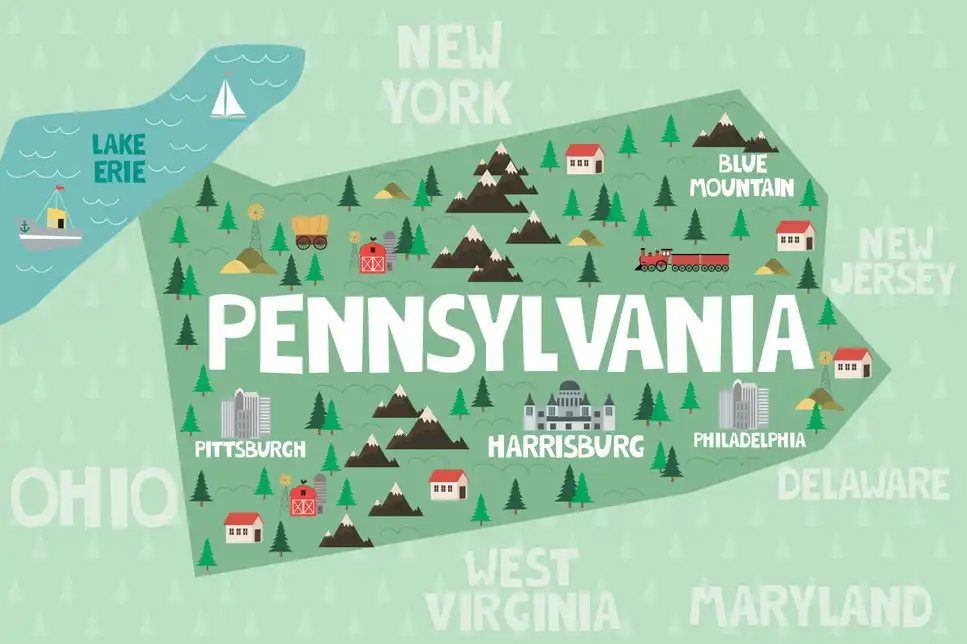
Everything you need to know to launch your startup in Pennsylvania
Pennsylvania is a state rich with history. It's one of the country's leaders in manufacturing and in natural gas production. In addition to this, areas like Lancaster and Erie are drawing innovative tech entrepreneurs.
If you want to start a business in Pennsylvania, we'll walk you through the steps you need to follow. First, though, let's have a look at the state's business climate.
Pennsylvania for startups
With the one of the highest corporate tax rates in the country and sluggish GDP growth, Pennsylvania can be a tough environment for startups. However, don't let this scare you away. Plenty of startups have found success in the Keystone State, and 44 of the country's 1,000 largest companies have chosen Pennsylvania as their home.
Pennsylvania by the numbers

Planning your business
A good business starts with a good idea, and builds on it with a concrete plan. Fortunately, we've written a comprehensive guide to writing a business plan. But here's a quick look at some of the details your business plan will need to take into consideration.
If you're looking to launch your business in Pennsylvania, you'll need to make sure there's a market demand. While your business may be solely online and find potential customers around the world, if you're looking to stay local you should consider some of the fast-growing industries in Pennsylvania, such as:
Structuring and registering your business in Pennsylvania
With a business plan in place, you'll need to start the practical steps of registering your business in Pennsylvania, and that means you'll need to decide on a business structure.
There are four basic structures you can choose when starting a business in Pennsylvania. Each structure has its own benefits and risks, and you can read more about each in our guide to structuring your startup .
The four main business structures are:
Regardless of the structure you choose, there are a few steps you'll need to follow to start a business in Pennsylvania.
Get your EIN
You'll need to obtain a Federal Employer Identification Number. Even if you won't initially hire employees, it's important to get your EIN. Not only is it useful for when you eventually do hire employees, it's required information on many of the forms you'll fill out in the process of setting up your business.
You can register for your EIN online on the IRS website. The form is easy to complete, and there's no cost involved.
Obtain relevant licenses and permits
You'll also need to look into the relevant licenses and permits for your business. These are usually required at a local level. To find out if you need a license or permit to operate your business you can check Pennsylvania's database of local registration and permits .
Register for relevant taxes
To operate a business in Pennsylvania, you'll need to register for Employer Withholding Tax and Unemployment Compensation Tax. Depending on your business, you may also need to register for state sales tax or various other state taxes. You can register for all the relevant taxes on the Pennsylvania Department of Revenue website.
How to form a Sole Proprietorship in Pennsylvania
A Sole Proprietorship is the easiest business structure to form. In a Sole Proprietorship, the business owner is solely liable for the business.
A Sole Proprietorship is a pass-through entity for tax purposes. This means you'll report any business profits and losses on your personal income tax. Pennsylvania has a flat state income tax rate of 3.07%.
Starting a Sole Proprietorship is simple. First, you'll choose a business name. You can search the Pennsylvania database of business names to make sure your business name isn't already taken.
If the business name differs from your given name, you'll need to register it with the Pennsylvania Department of State. You'll fill out the Registration of Fictitious Name form. There's a $70 filing fee.
If you plan to hire employees in the future, you should register for an EIN. You'll also need to check to see if you need any local licenses or permits to operate your business.
How to form a Partnership in Pennsylvania
A Partnership is a business formed by at least two parties, either individuals or businesses. A Partnership, like a Sole Proprietorship, is a pass-through entity. This means business profits and losses are reported on the partners' personal tax returns.
There are three main types of partnership structures: General Partnership, Limited Partnership and Limited Liability Partnership.
Although it's not a legal requirement, you should also draft a partnership agreement, regardless of the partnership structure you choose. This agreement sets out the rights and responsibilities of the partners, as well as what will happen upon the dissolution or sale of the business.
General Partnership
In a General Partnership, the partners are both involved in the day-to-day management of the business, and are equally liable for the business' debts.
To form a General Partnership in Pennsylvania, you'll first choose a business name. If your business' name differs from the surnames of the partners, you'll have to file a Registration of Fictitious Name form.
Next, you'll file the Certificate of Partnership Authority . This form sets out the name of your General Partnership, your principal place of business and who in the business has the authority to engage in real estate transfers or other transactions on behalf of the partnership. You'll file this form with the Pennsylvania Department of State, and there's a $70 filing fee.
Limited Partnership
In a Limited Partnership, at least one party serves as a General Partner while at least one other party serves as a Limited Partner. A Limited Partner acts as an investor in the business. They're only liable for their investment, but they also can't withdraw their investment without the consent of the General Partners.
To start a Limited Partnership in Pennsylvania, you'll need to choose a business name. As with a General Partnership, if the name differs from the surname of the partners, you'll need to register a fictitious business name with the state.
Next you'll fill out the Certificate of Limited Partnership form. You'll need to provide the business' name and address along with the name, address and signatures of each General Partner. Once complete, you'll file the form with the Department of State. There's a $125 filing fee.
Limited Liability Partnership
A Limited Liability Partnership is a type of partnership structure that limits each partner's personal liability to the amount they invest in the business. It also means each partner isn't liable for the actions of any other partners.
To form a Limited Liability Partnership in Pennsylvania, you'll first need to choose a business name. Your business name must include the words "Company," "Limited," "Limited Liability Partnership" or an abbreviation of one of these.
Next you'll fill out the Statement of Registration for a Limited Liability Partnership . This form will ask the name of your company, whether it's a general or limited partnership, the address of your principal place of business and the name and signature of one of the General Partners. You'll file this form with the Department of State, and there's a $125 filing fee.
How to form a Limited Liability Company (LLC) in Pennsylvania
A Limited Liability Company, or LLC, is a business structure that combines the pass-through taxation of a sole proprietorship or partnership with the asset protection of a corporation. It's a popular business structure because it's flexible and easy to form.
An LLC is comprised of members (although you can be a single-member LLC). The management of an LLC can either be through its members or through designated managers. Like a sole proprietorship or partnership, an LLC doesn't pay corporate tax. Instead, its profits and losses are reported on the individual tax returns of its members.
To form an LLC in Pennsylvania, you'll first choose a business name. As an LLC, your business name must end in the words "Limited Liability Company," "Company," or "Limited."
Next, you'll file the Certificate of Organization for an LLC form. This form will ask for:
You'll also have to indicate if your business is what's known as a "restricted professional service." These are businesses like medical and legal practices and accountancies.
Next, you'll need to complete and attach the New Entity Docketing Statement form. This form will ask for:
Once complete, you'll file both these forms with the Pennsylvania Department of State. There's a $125 filing fee.
How to form a Corporation in Pennsylvania
A corporation in the most complex business structure. It serves as an entity separate from its directors, and is taxed as an entity. Corporations in Pennsylvania are subject to the state's 9.99% corporate tax rate (unless your corporation receives S-corp designation from the IRS, in which case each shareholder will pay personal tax on their share of the company's net income).
There are a few steps you should follow when forming a corporation, regardless of where you choose to be located. You can read all about them in our guide to structuring your business , but here's a brief overview:
Choose a name
To start a corporation in Pennsylvania, you'll first choose a business name. The name must include one of the following, or an abbreviation thereof:
Draft bylaws
These will set out the rules governing your organization. There's no legal requirement to draft corporate bylaws, but it's essential for both setting out the operating rules of your company and making a good impression on investors.
Appoint directors
Pennsylvania doesn't require you to provide the names of your initial board of directors when setting up your corporation, but it's another signal to potential investors that your business endeavor is serious. Once you've appointed directors, you can hold your first board meeting and adopt your corporate bylaws.
Keep a corporate records book
This book will hold all the important documentation for your corporation, including your bylaws, the minutes of board meetings and stock certificates.
File your Articles of Incorporation
In Pennsylvania, the Articles of Incorporation form will require you to provide your corporation's name and address, whether or not the corporation will issue stock and the number of shares it's authorized to issue, the name and address of each incorporator and the signature of each incorporator. You'll file this form with the Department of State, and you can submit the form online . There's a $125 filing fee.
How to start a Nonprofit in Pennsylvania
The process for forming a nonprofit in Pennsylvania is similar to forming a corporation, but there are a few extra steps involved.
As with a corporation, you'll need to choose a name. There are no specific naming conventions for Pennsylvania nonprofits.
Next you'll need to appoint directors. You must have at least one director on your board.
Next, you'll complete and file the Articles of Incorporation - Nonprofit form. This form will ask for your corporation's name and address, the purpose of the corporation, whether or not it will issue stock, whether or not it will have members and the name, address and signatures of each incorporator. There's a $125 filing fee, and you can file the form online .
When you file your Articles of Incorporation, you'll also need to provide a New Entity Docketing Statement including your nonprofit's name, the name and address of the individual responsible for your initial tax reports, a description of your nonprofit's business activity, your EIN and your nonprofit's fiscal year end
One unique requirement in Pennsylvania is that you'll also need to advertise either your intent to file Articles of Incorporation or your actual filing in two newspapers. You can find a list of preferred publications on the Department of State website .
Once these forms are filed and you've complied with the state's advertising requirements, you'll need to obtain your tax exempt status. This means completing and filing IRS Form 1023 . We'll warn you ahead of time: it's a monster form and there's an $850 filing fee .
After your Form 1023 is processed (which could take a few months), you'll receive a Letter of Determination advising you of your Federal tax exempt status. Using a copy of this Letter of Determination, you can file the Application for Sales Tax Exemption . Another fair warning: this is a complicated form, but it includes detailed instructions. You'll file this form with the Pennsylvania Department of Revenue. Make sure to include a copy of your Articles of Incorporation.
Protecting your business in Pennsylvania
In Pennsylvania, any business with employees is required to carry workers' compensation insurance. If your business owns a vehicle, you'll also need commercial car insurance. While general liability insurance and professional liability insurance aren't legal requirements in Pennsylvania, they may be a wise idea for your business.
Important resources
Pennsylvania has some excellent resources for startups and small businesses. Here are a few:
This network of statewide centers offers free one-on-one consultation, training and informational resources for business owners.
This Federal site offers plenty of advice, informational materials and advocacy resources.
The Pennsylvania Department of Community and Economic Development site offers helpful links to small business assistance, funding and local tax information.
This site offers some amazing resources for small business operators, from market research to industry news, along with practical advice.
Our 7-part guide to starting a business will walk you through every step of your startup, from ideation to funding, marketing to scaling. It's the ultimate resource for startups.
Povejte nam, kaj želite imeti opravljeno
Vnesite ime svojega projekta
Povezane zgodbe





Pogovorite se z našim tehničnim kopilotom, ki vam bo pomagal pri projektu
Članki, ki jih priporočamo samo vam

If you want to stay competitive in 2021, you need a high quality website. Learn how to hire the best possible web developer for your business fast.
11 min read

Want to get into web development but don't know whether to be a front end or back end dev? We'll teach all of the skills required for both jobs.
8 min read

Scaling your startup is a delicate balancing act. Scale too quickly and your funding is depleted. Scale too late you've missed your opportunity.
23 min read

Struggling to come up with the best idea? Our exhaustive guide runs through the idea generation process to help you tap into your inner Steve Jobs.
10 min read
Hvala! Po e-pošti smo vam poslali povezavo za prevzem brezplačnega dobropisa.
Pri pošiljanju vašega e-sporočila je šlo nekaj narobe. Poskusite znova.



Kopiranje v odložišče ni uspelo, poskusite znova po spremembi vaših dovoljenj.
Skopirano v odložišče.
Nalaganje predogleda
Geolociranje je bilo dovoljeno.
Vaša prijavna seja je potekla, zato ste bili odjavljeni. Prosimo, da se znova prijavite.